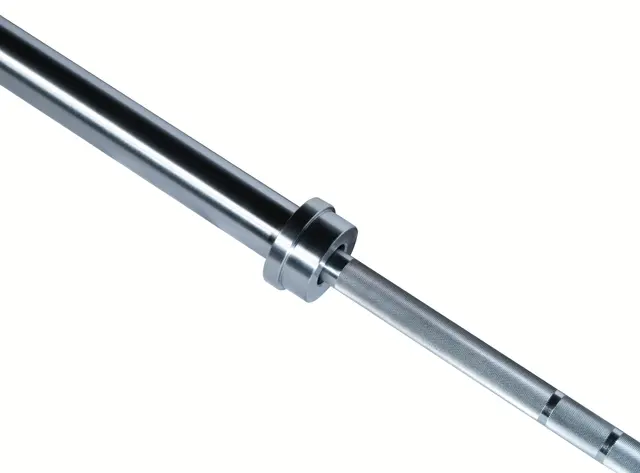
A barbell and plate set should be compared as a working combination. The bar must suit the exercises, fit the rack where relevant and accept the plates and collars you intend to use. Plates need to fit the sleeves and provide useful increments within the available loading space. Product names such as standard, Olympic or professional can help describe a range, but they are not enough to establish compatibility. Record the dimensions and intended use of each component before treating a bundle as complete.
Match plate holes and sleeves
York's catalogue separates one-inch standard equipment from two-inch Olympic equipment, illustrating why sleeve and plate-hole size must be checked together. Other details still matter within a nominal category. Ask for the actual stated dimensions and the supplier's compatibility confirmation for the selected products. Check whether collars are included and which sleeve type they fit. Adapters can introduce additional requirements, so use only combinations that the relevant manufacturer specifies rather than assuming any sleeve can accept any plate with an accessory.
Check rack fit and room width
The bar's total length does not tell you how much room exists between its sleeves. Compare the rackable shaft length with the width of the rack and its J-cups. A shorter bar may fit a small room but fail to sit correctly on a particular rack. Leave space beyond both sleeves to load and remove plates. If a bar is intended for floor-based movements, include the surrounding working area as well. Ask for a dimensioned drawing when catalogue descriptions are ambiguous.
Choose the bar for its intended movements
Powerlifting, weightlifting and general training place different demands on grip, sleeve rotation and the bar's behavior. Compare the manufacturer's stated purpose, shaft diameter, knurling and center-knurl arrangement. Avoid translating one tensile-strength figure into an overall durability ranking. Warranty conditions can also depend on the way the bar is used. York's published terms, for example, distinguish certain bar types and uses. Read the terms for the exact model instead of assuming that every bar in a brand has identical coverage.
Check usable loading space
Plate thickness affects how much weight fits on a sleeve. Compare the loadable sleeve length with the actual plates and collars you plan to use. A total set weight can hide an inconvenient mix of large plates and missing small increments. Write out both sides of a few intended working loads to confirm that the set is practical. Keep units consistent; a collection mixing kilograms and pounds needs clear labeling and careful calculation rather than casual rounding during loading.
Distinguish coating from permitted use
Rubber coating and bumper construction are different product characteristics. Do not assume that a coated iron plate is intended for the same handling as a bumper plate, or that every bumper has the same dropping instructions. Check the permitted surface, loading arrangement and minimum-use conditions in the manufacturer's guidance. Flooring also has its own requirements. When a training method involves releasing a loaded bar, confirm the entire combination of bar, plates, platform and environment is suitable.
Plan storage and inspection
Plate storage must accept the selected hole size and support the intended load. Check peg spacing and how easily plates can be removed without lifting past another stack. For bars, compare horizontal or vertical storage with the manufacturer's recommendations and your ceiling clearance. Inspect sleeves, collars and plate contact surfaces according to the product instructions. Keep records of exact model numbers so that a later replacement collar or additional plate can be checked against the existing setup.
A useful purchase specification
- Bar purpose, total length, rackable length, sleeve diameter and loadable length.
- Plate-hole dimensions, thickness, units and the complete weight combination.
- Collar compatibility and whether collars are included.
- Permitted handling, floor requirements and warranty conditions.
- Storage arrangement, delivery cost and replacement availability.
A compatible, well-planned set is more valuable than a collection selected by total weight alone. Verify the dimensions and usage terms before comparing the final delivered prices.

Have something helpful to share? Be the first to join the conversation.