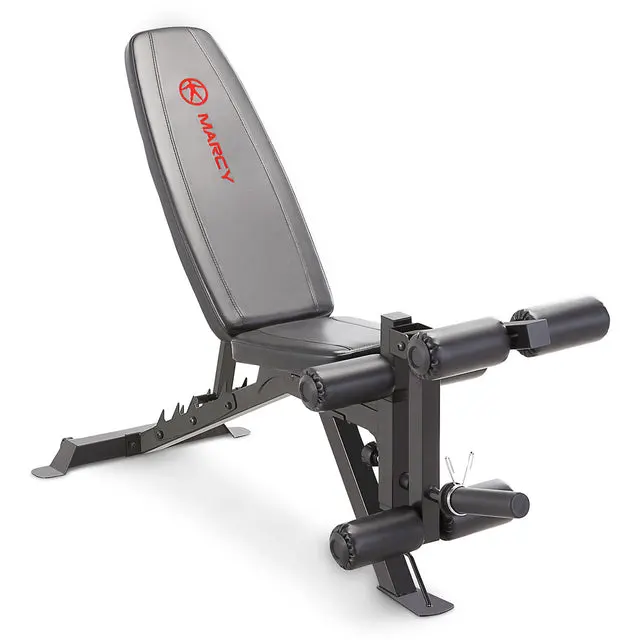
A weight bench affects how you enter an exercise, where your feet rest and how well the equipment fits its surrounding rack. The headline distinction is simple: a flat bench offers one working position, while an adjustable model supports a range of angles. The better choice depends on the exercises you actually plan to perform. Before comparing upholstery colors or accessory bundles, establish the bench dimensions, adjustment method, intended use and stated load limits. Those details determine whether it belongs in your setup.
Start with the positions you need
List the bench angles used in your routine. If almost all work is flat, a dedicated flat bench may offer a simpler setup with fewer adjustments. An adjustable bench makes sense when incline work or seated movements are part of the plan. A decline setting is useful only if you need it and the bench includes the appropriate support and instructions. Count usable positions rather than assuming that more positions automatically make the bench more practical.
Check height and pad geometry
The bench should allow you to take the position required by your chosen exercises. Compare pad height, back-pad length, width and the gap between pads when the bench is flat. Try a similar geometry where possible, particularly if users differ substantially in height. A wide pad may feel supportive for some movements and obstructive for others. The relevant question is how the pad works with your body and exercise, not whether it is described as premium or extra thick.
Read the capacity definition
Ask whether the stated capacity includes both the user and external weights, and whether it applies in every advertised position. Check for separate limits on attachments and moving components. A number without a clear test or usage description is difficult to compare across brands. Match the intended environment as well: a residential-use warranty and a commercial-use warranty can have different conditions. Obtain written specifications for the exact model rather than borrowing the rating from another bench in the same range.
Inspect the adjustment mechanism
Ladder systems, locking pins and other mechanisms vary in how they engage. The lock should be visible or otherwise easy to verify according to the manual. Ask how the seat and back pad adjust, whether changes can be made without awkward lifting and whether the selected position is clearly marked. During any physical inspection, look for unexpected movement and damaged hardware. Do not treat movement in a display unit as normal without a model-specific explanation from the supplier.
Confirm rack compatibility
Measure the bench base as well as the pad. Wide rear feet, transport wheels or a long frame can meet a rack crossmember before the pad reaches the right position. Check whether the bench can be centered in the rack and whether your chosen bar-support height remains available. If a bench and rack are sold as a bundle, ask the seller to confirm the actual models included. The package photograph may show optional equipment or a different version.
Consider storage and maintenance
Transport handles and wheels can matter when the bench must move between exercises. Upright storage is appropriate only when the manufacturer allows it and provides a stable method. Look for replaceable upholstery, accessible fasteners and a clear cleaning recommendation. Heavy construction can help a bench feel substantial but also make daily movement inconvenient. Choose a weight and handling arrangement that suits the actual room rather than assuming the heaviest option is always best.
What a useful quotation includes
- Exact model, flat height, pad dimensions and overall footprint.
- Back-pad and seat positions, including how each locks.
- The definition of capacity and any position-specific limits.
- Rack compatibility, included attachments and storage instructions.
- Delivery, assembly, wear-part availability and applicable warranty.
For shared rooms, rehearse moving the bench from storage to its working position. If setup is difficult before you start training, that inconvenience is likely to remain part of every session.

Have something helpful to share? Be the first to join the conversation.